
What Zarzuela Is, Where It Comes From, and Why It Still Thrills Audiences Today
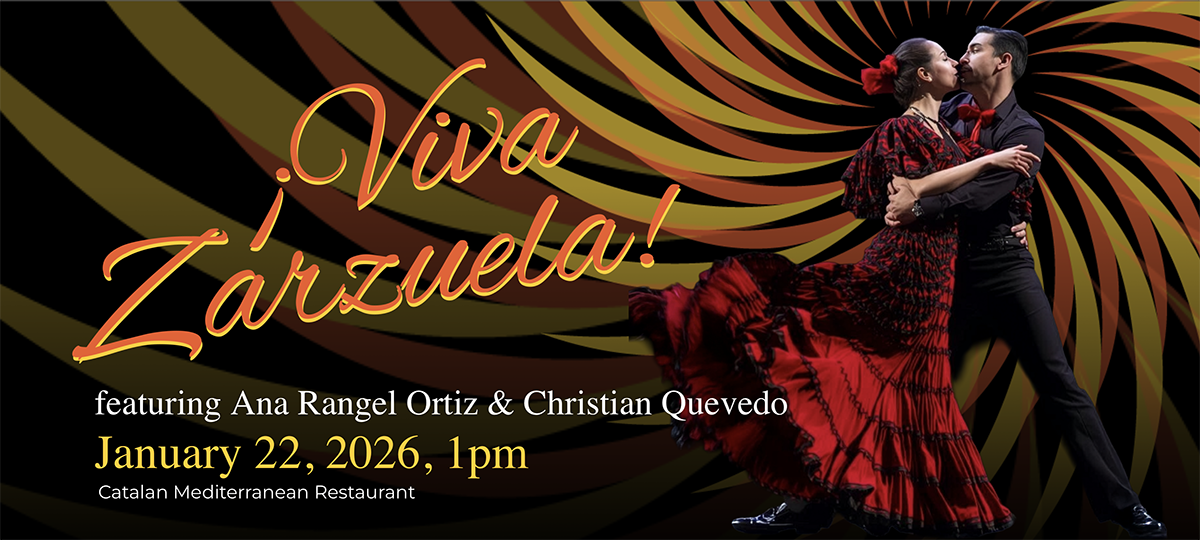
As we look forward to ¡Viva Zarzuela!, the question I’m most often asked is a simple one: What in the world is Zarzuela?
The short answer is that it is a uniquely Spanish form of musical theater. But as with many great art forms, the short answer barely scratches the surface.
Zarzuela blends singing, spoken dialogue, and dance into theatrical works that can be playful, romantic, political, heartfelt, and sometimes gloriously over the top. It is often compared to operetta, but that comparison only tells part of the story. Zarzuela is older, more varied, and more deeply tied to Spanish culture and everyday life than most audiences realize.
You might hear it described as the Spanish version of Gilbert and Sullivan—with more passion and fire or even as telenovelas set to music. Those descriptions are amusing, and not entirely wrong, but it’s roots run much deeper.
The Origins of Zarzuela: A Spanish Art Form Is Born
Zarzuela emerged in the 17th century, long before operetta became fashionable in Europe. Its name is widely believed to come from the Palacio de la Zarzuela, a royal hunting lodge just outside Madrid. The palace was surrounded by dense brambles—zarzas in Spanish—and it was here that early court entertainments blending music and drama were performed.
What began as royal entertainment soon evolved into something much broader. Unlike Italian opera, which often focused on mythology or nobility, Zarzuela embraced everyday people, regional customs, and contemporary social issues. Farmers, soldiers, shopkeepers, lovers, and scoundrels all found their way onto the stage.
This grounding in real life is one of it’s defining characteristics and one of the reasons it resonated so strongly with Spanish audiences for centuries.
What Makes Zarzuela Unique?
At its core, this is hybrid theater. It does not demand nonstop singing like opera, nor does it rely solely on spoken text like straight theater. Instead, it moves fluidly between:
- Fully sung arias and ensembles
- Spoken dialogue that advances the plot
- Choral moments representing community life
- Traditional and stylized dance sequences
This structure allows it to shift tone rapidly. A comedic scene may give way to a moment of sincere lyricism. A lively dance might be followed by a deeply emotional solo. That flexibility is part of its charm—and part of its dramatic power.
Musically, it incorporates Spanish folk rhythms, regional dances, and popular song styles, drawing from flamenco, seguidillas, jotas, habaneras, and more. These elements give the music an unmistakable Spanish identity while remaining accessible to modern audiences.
From Comedy to Grand Drama
Not all Zarzuela is lighthearted, and not all of it is comic. Over time, the genre developed into multiple forms, ranging from short, humorous works to larger, more operatic compositions.
Some focus on satire and social commentary, poking fun at class divisions, politics, or romantic conventions. Others explore serious themes such as honor, loyalty, love, and loss. In its more dramatic incarnations, Zarzuela can rival opera in emotional depth while maintaining its distinctive spoken-and-sung structure.
This wide emotional range is one of the reasons Zarzuela has endured. It reflects life as it is lived—sometimes funny, sometimes tragic, often both at once.
Influence Beyond Spain
Although Zarzuela is deeply rooted in Spanish culture, its influence extends far beyond Spain itself. The genre traveled throughout Latin America, where it took on new flavors and local traditions.
One of the most famous figures associated with Zarzuela is Plácido Domingo, who began his career performing with his family’s troupe in Mexico. Long before he became one of the world’s most celebrated operatic tenors, Zarzuela shaped his musical instincts, theatricality, and connection to audiences.
This is no coincidence. Zarzuela demands versatility. Performers must act, sing, speak, and often dance—sometimes all within the same scene. It is an ideal training ground for artists who go on to excel in opera, musical theater, or both.
Dance Is An Essential Element
Dance is not an optional embellishment in Zarzuela—it is an integral storytelling tool. Many works include choreographed dances that express regional identity, emotional tension, or communal celebration.
These dances are not merely decorative. They help define characters, establish setting, and reinforce the cultural context of the story. Seeing Zarzuela performed without dance would be like hearing flamenco without rhythm—it simply wouldn’t be complete.
Audiences will have the opportunity to experience this firsthand, with a featured dancer performing selections that highlight how movement and music intertwine in this vibrant art form.
Why This Art Form Still Matters Today
In an era of genre-blending and cross-cultural storytelling, Zarzuela feels surprisingly contemporary. Its fusion of music, dialogue, and dance mirrors the structure of modern musical theater, while its emphasis on relatable characters and social themes keeps it emotionally relevant.
This musical theater also serves as a powerful reminder that opera and musical theater are not static traditions. They are living art forms, shaped by culture, language, and history. Its longevity is proof that audiences have always been drawn to stories that reflect their lives—told with beauty, humor, and heart.
Experience Zarzuela Up Close
At our January 22 performance, you’ll hear a curated selection of excerpts from several different Zarzuelas, offering a rich introduction to the variety and vitality of the genre. Combined with dance, live performance, and an intimate setting, this is an opportunity to experience this musical art form the way it was meant to be enjoyed—up close, personal, and full of life.
Add fabulous food and drink to the mix, and you have an evening that is as festive as it is enriching.
So if you’ve ever wondered what this is all about—or if you think you already know—this is your invitation to discover why audiences have been saying ¡Viva Zarzuela! for over four hundred years.